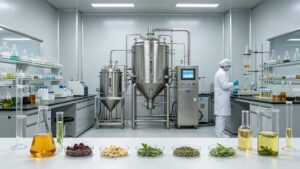
Gardenia blue pigment is a premium natural water-soluble plant colorant extracted and biologically fermented from the ripe fruits of Gardenia jasminoides, a traditional medicinal and edible plant. Derived from natural genipin glycoside compounds in gardenia fruit through enzymatic hydrolysis and purification reactions, it is one of the few stable natural blue colorants in the global clean ingredient market. Unlike unstable plant-based blue pigments and irritating synthetic chemical dyes, gardenia blue features pure natural sources, mild properties, excellent water solubility, outstanding environmental stability and dual food-cosmetic grade applicability, making it a core alternative to synthetic blue colorants.
In the current market, most conventional gardenia blue products are crude processed pigments with low purification degrees, containing residual plant impurities, incomplete fermentation byproducts and unstable color tone. These low-grade pigments suffer from poor light resistance, weak heat stability, easy color fading and impure hue, which greatly limit their application in high-end food, clean beauty cosmetics and long-shelf-life products. In addition, many ordinary natural blue pigments such as spirulina phycocyanin are extremely sensitive to acid, alkali and high temperature, with short color retention time and high batch color difference, failing to meet industrial standardized production requirements.
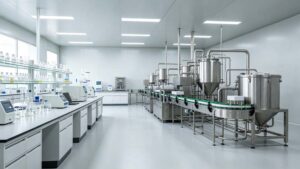
As a professional manufacturer focusing on high-purity natural plant colorants, KangPure adopts exclusive low-temperature biological fermentation + multi-stage membrane separation purification technology to produce cosmetic and food-grade gardenia blue pigment. Abandoning traditional high-temperature extraction and rough fermentation processes that cause color distortion and impurity residue, our technology fully retains the active color-forming molecular structure, ensuring uniform hue, strong color fastness and ultra-high safety. All products comply with FDA food additive standards, EU CosIng cosmetic regulations and ISO22000 food safety management system certification. Each batch is equipped with complete COA purity reports, MSDS safety datasheets, heavy metal and microbial full-item test reports, fully supporting global food processing, cosmetic formulation, cross-border filing and export customs clearance.
2. Molecular Characteristics & Core Advantages of Gardenia Blue Pigment
High-quality KangPure gardenia blue pigment is a dark blue uniform powder or refined aqueous solution with stable molecular structure and excellent water solubility. The color-forming active substance is natural genipin polymer, which does not contain synthetic dyes, azo components, heavy metals and harmful chemical residues. Compared with synthetic blue dyes and other natural blue colorants, it has four irreplaceable core advantages in industrial application: full water solubility, superior environmental stability, dual food-cosmetic safety, and pure natural clean label attributes.
First, excellent full water solubility with no precipitation or layering. Gardenia blue pigment belongs to high-polarity water-soluble molecular compound, which can be quickly and uniformly dissolved in pure water, sugar water and aqueous solution systems without auxiliary solvents. It realizes uniform coloring without floating color, precipitation or turbidity. It is perfectly compatible with water-based food systems and aqueous cosmetic formulas, avoiding the formula adaptation problems of oil-soluble pigments, and greatly simplifying industrial coloring and formula debugging processes.
Second, ultra-strong environmental stability and long color retention. This is the most prominent advantage of gardenia blue pigment over other natural blue colorants. It has excellent heat resistance, capable of withstanding high-temperature processing above 120°C such as food boiling, baking and UHT sterilization without fading or discoloration. Meanwhile, it features outstanding light resistance and wide pH adaptability, maintaining stable pure blue tone in conventional acidic and neutral formula environments, not easy to oxidize and fade during long-term product storage, effectively reducing product color difference and scrap rate.
Third, food and cosmetic dual-grade safety with zero irritation. Gardenia blue pigment is a natural edible colorant approved by multiple international regulatory authorities, with no toxicity, no sensitization, no stimulation and no harmful residue. It does not contain azo dyes, formaldehyde, heavy metals and other prohibited ingredients. It is safe for long-term topical skin contact and oral intake, adapting to sensitive skin cosmetics, infant auxiliary food, high-end beverage and clean beauty product production standards, perfectly fitting the global zero-addition and clean label development trend.
Fourth, natural antioxidant activity with dual effects of coloring and maintenance. Different from single-coloring synthetic dyes, gardenia blue pigment retains natural plant active ingredients, with certain free radical scavenging and antioxidant capacity. When applied in skincare and makeup products, it can assist in improving skin oxidative dullness; when applied in food and beverages, it can delay product oxidative deterioration, realizing the dual value of formula coloring and quality maintenance, and enhancing product comprehensive competitiveness.
3. Coloring Principle & Core Application Mechanism
3.1 Natural Biological Color-Forming Principle
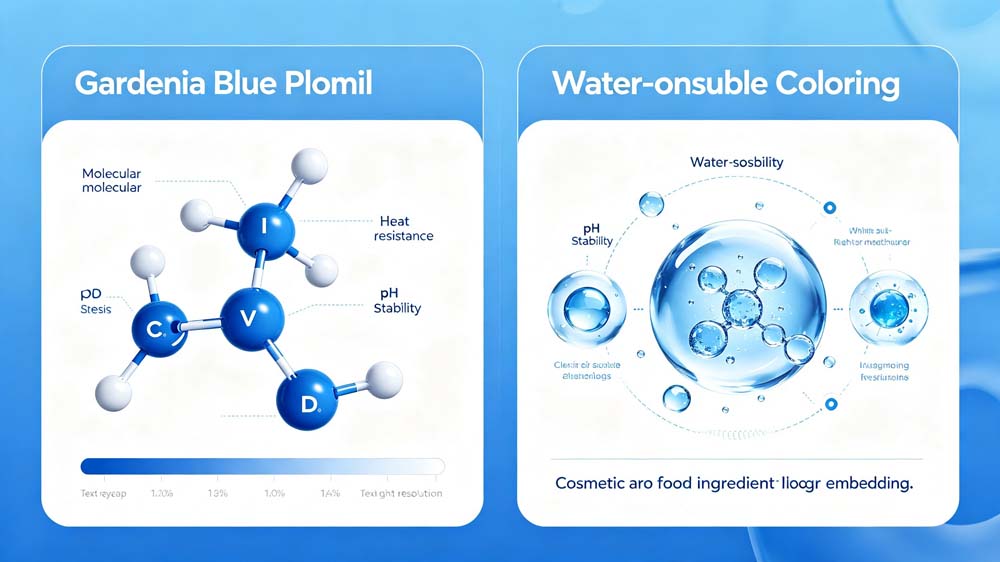
Gardenia blue pigment is formed by specific enzymatic hydrolysis and biological polymerization of geniposide, the characteristic active ingredient of gardenia fruit. After precise biological fermentation, geniposide is hydrolyzed into genipin monomers, which are then polymerized with natural amino acids to form stable macromolecular blue conjugated structure. This natural biological color-forming mechanism makes its blue tone pure, soft and natural, avoiding the stiff and dazzling blue tone of synthetic dyes. The color molecular structure is stable and not easy to decompose, laying a foundation for long-term color retention of products.
Most natural blue pigments rely on unstable anthocyanin and algal protein structures, which are easily decomposed by temperature, light and pH changes, resulting in color fading and tone deviation. In contrast, the biological polymer structure of gardenia blue has strong molecular toughness, which can resist the interference of external environmental factors, ensuring consistent and uniform coloring effect in complex industrial production and long-term storage scenarios.
3.2 Excellent Water-Soluble Uniform Coloring Mechanism
The molecular surface of gardenia blue pigment contains a large number of hydrophilic groups, which can form stable hydrogen bond binding with water molecules, achieving rapid dissolution and uniform dispersion in aqueous systems. It can penetrate and diffuse evenly in water-based food and cosmetic formulas, realizing overall consistent coloring without local deep color, floating color or particle precipitation. For transparent beverages, clear essences and hydrating skincare products, it can present bright and transparent natural blue texture, improving product appearance grade greatly.
In addition, gardenia blue pigment has good formula compatibility with conventional food additives and cosmetic auxiliary materials. It will not react with sugar, vitamins, plant extracts, hyaluronic acid and other common ingredients, no color conflict, no formula deterioration, and can coexist stably for a long time, meeting the diversified formula design needs of high-end products.
3.3 Natural Antioxidant & Preservative Auxiliary Mechanism
Gardenia blue pigment inherits the natural antioxidant activity of gardenia plant active ingredients, which can effectively clear excess free radicals in product formulas, inhibit lipid oxidation and ingredient deterioration. For fruit and vegetable beverages, dairy products and water-based skincare products prone to oxidative deterioration, it can delay ingredient aging and discoloration, extend product shelf life, and realize the integrated effect of coloring, color protection and fresh retention.
At the same time, it has mild antibacterial and anti-inflammatory auxiliary effects. When applied in facial masks, body lotions and daily skincare products, it can alleviate skin oxidative stress, improve dull and sallow skin tone, and endow colored cosmetics with subtle skincare attributes, forming differentiated product advantages compared with ordinary synthetic colorants.
4. Standard Dosage & Full-Scenario Application Formulas
Combined with KangPure laboratory long-term formula debugging data, FDA food additive limit standards and EU cosmetic ingredient regulations, the standard addition ratio, applicable scenarios and compatible auxiliary materials of gardenia blue pigment in food and cosmetic fields are summarized as follows, supporting direct reference for brand R&D and formula engineers:
4.1 Food Grade Application & Recommended Dosage
-
Fruit & Vegetable Beverages, Carbonated Drinks, Functional Drinks Recommended Dosage: 0.01%-0.08% Compatible Auxiliaries: Vitamin C, Fruit Concentrate, Xylitol, Natural Preservatives Application Effect: Present transparent sky blue tone, inhibit beverage oxidation and discoloration, maintain fresh flavor and stable color
-
Candy, Jelly, Pudding, Dessert Products Recommended Dosage: 0.02%-0.10% Compatible Auxiliaries: Gelatin, Pectin, Sucrose, Natural Flavor Application Effect: Uniform coloring, high color saturation, resistant to baking and low-temperature refrigeration fading, stable texture color
-
Instant Noodles, Pastry Surface Coloring, Puffed Food Recommended Dosage: 0.01%-0.06% Compatible Auxiliaries: Food Grade Starch, Edible Oil, Natural Seasoning Application Effect: High temperature resistant coloring, no fading during baking and frying, uniform product color
-
Jam, Fruit Puree, Yogurt & Dairy Products Recommended Dosage: 0.01%-0.05% Compatible Auxiliaries: Probiotics, Milk Powder, Fruit Pulp Application Effect: Mild and natural coloring, no damage to active ingredients, delay dairy oxidation deterioration
4.2 Cosmetic Grade Application & Recommended Dosage
-
Transparent Hydrating Essence, Toner, Hydrating Spray Recommended Dosage: 0.005%-0.03% Compatible Auxiliaries: Hyaluronic Acid, Panthenol, Tremella Polysaccharide, Ectoin Application Effect: Present clear light blue texture, improve product appearance, assist antioxidant and soothe skin
-
Facial Mask Essence, Gel Skincare Products, Body Lotion Recommended Dosage: 0.01%-0.05% Compatible Auxiliaries: Centella Extract, Ceramide, Squalane Application Effect: Uniform coloring, stable color system, improve skin dullness with mild antioxidant effect
-
Water-Based Eye Makeup, Nail Polish, Clean Makeup Products Recommended Dosage: 0.02%-0.08% Compatible Auxiliaries: Cosmetic Grade Water-Based Solvent, Plant Humectant Application Effect: Pure natural coloring, no skin irritation, fashionable natural blue makeup tone
-
Children’s Cosmetics, Sensitive Skin Skincare Products Recommended Dosage: 0.005%-0.02% Compatible Auxiliaries: Mild Plant Extracts, Non-Irritating Humectants Application Effect: Ultra-mild safe coloring, zero stimulation, compliant with clean beauty safety standards
5. KangPure Gardenia Blue Pigment Core Advantages & Quality Comparison

At present, the market blue colorants are mainly divided into synthetic chemical dyes and ordinary crude natural pigments. Synthetic blue dyes have bright color but hidden safety risks such as irritation and residual harmful components, which are gradually restricted by global clean beauty and food safety regulations. Ordinary natural blue pigments represented by spirulina phycocyanin have poor stability, easy fading and high batch difference, which cannot meet the high-standard production needs of high-end food and cosmetics. KangPure high-purity gardenia blue pigment breaks through the shortcomings of traditional colorants, with comprehensive advantages in safety, stability, color tone and compatibility, becoming the preferred natural blue coloring raw material for global high-end brands.
5.1 Exclusive Core Advantages of KangPure Gardenia Blue Pigment
-
Food & Cosmetic Dual-Grade Ultra-High Safety KangPure gardenia blue pigment is made from natural gardenia fruit raw materials, processed by pure biological fermentation and physical purification, without chemical synthesis modification. It does not contain azo dyes, heavy metals, pesticide residues and irritating components. It has passed FDA food safety certification, EU cosmetic ingredient safety inspection and ISO22000 food system certification. It is applicable to oral food and skin contact cosmetics, especially suitable for infant food, children’s cosmetics and sensitive skin clean beauty products, with zero safety risk.
-
Superior Stability Beyond Ordinary Natural Pigments Different from phycocyanin and anthocyanin pigments that are sensitive to light, heat and pH, KangPure gardenia blue pigment has strong environmental resistance. It can withstand high temperature of 120°C for long-term processing, resist ultraviolet light irradiation and acid-base formula fluctuation, maintain pure and stable blue tone throughout product production, transportation and shelf life, effectively solve the pain points of easy fading and color difference of natural pigments, and reduce brand product scrap rate.
-
Pure Natural Tone & High Color Uniformity Ordinary crude gardenia blue pigments have impure tone, partial green and gray color, and uneven coloring. KangPure adopts multi-stage membrane separation impurity removal technology to completely eliminate fermentation byproducts and plant impurities. The product has pure blue tone, natural and soft color, high coloring power, uniform dispersion, no floating color or precipitation, which can improve the high-end texture of food and cosmetic products.
-
Full Water Solubility & Wide Formula Compatibility The product has ultra-high water solubility, can be quickly dissolved in all water-based systems without auxiliary solvents, and is compatible with most food ingredients and cosmetic active materials. It will not cause formula turbidity, stratification and ingredient inactivation, with low formula debugging difficulty and strong industrial adaptability, suitable for mass standardized production.
-
Complete Compliance Qualifications & Customized Service KangPure provides batch-specific COA test reports, MSDS safety datasheets, food and cosmetic filing certificates and complete export customs clearance documents. Support 10g, 50g free sample testing and 25kg bulk wholesale. Professional R&D team provides free formula guidance, color matching debugging and customized processing services to solve brand coloring and formula adaptation problems in one stop.
5.2 Horizontal Quality Comparison: KangPure Gardenia Blue vs Ordinary Natural & Synthetic Blue Colorants
|
Comparison Dimension
|
KangPure High-Purity Gardenia Blue Pigment
|
Ordinary Natural Blue Pigment (Phycocyanin)
|
Synthetic Blue Chemical Dye
|
|
Raw Material & Safety
|
Natural gardenia fruit source, biological fermentation, zero irritation, food-cosmetic dual-grade safe
|
Natural algal source, safe but with unstable active structure
|
Chemical synthetic source, contains potential irritants, limited in clean products
|
|
Temperature Stability
|
Resist 120°C high temperature, no fading during heating and sterilization
|
Poor heat resistance, easy fading above 60°C
|
Good heat resistance but with safety hidden danger
|
|
Light & pH Stability
|
Excellent light resistance, wide pH adaptation, long-term color retention
|
Sensitive to light and acid-base, easy oxidation discoloration
|
Stable color but poor environmental protection
|
|
Color Tone & Purity
|
Pure natural blue tone, uniform coloring, no gray or green deviation
|
Partial green tone, uneven coloring, obvious batch difference
|
Stiff exaggerated blue tone, unnatural texture
|
|
Solubility & Compatibility
|
Full water solubility, no precipitation, wide formula compatibility
|
Poor solubility in acidic environment, easy turbidity
|
Good solubility but easy ingredient conflict
|
|
Application Scenarios
|
High-end food, clean beauty cosmetics, children’s products, sensitive skin skincare
|
Low-temperature food, short-shelf-life daily cosmetics
|
Low-end industrial products, non-skin contact coloring
|
|
Clean Label Attribute
|
100% clean natural ingredient, compliant with global clean beauty standards
|
Natural source but unstable efficacy, limited high-end application
|
Non-clean ingredient, restricted by multiple regulations
|
The horizontal comparison fully shows that KangPure high-purity gardenia blue pigment perfectly balances safety, stability, color tone and environmental protection. It not only has the clean label safety of natural pigments, but also has the stability and color fastness superior to most natural colorants, effectively making up for the dual defects of unstable natural pigments and unsafe synthetic dyes. It is the optimal upgraded blue coloring raw material for high-end food and clean beauty cosmetic brands.
6. Market Application Prospect of Gardenia Blue Pigment
With the global clean label trend sweeping the food and beauty industry, consumers’ demand for product ingredients has shifted from simple coloring effect to natural safety, mild low irritation and healthy functionality. Synthetic chemical colorants are gradually phased out by high-end markets due to potential irritation, residue risks and non-environmental protection attributes. Natural plant colorants have become the mainstream development direction of the industry.
As a rare stable natural water-soluble blue colorant, gardenia blue pigment fills the market gap of high-safety and high-stability natural blue coloring raw materials. Unlike other natural blue pigments with poor stability and short color retention, it adapts to industrial high-temperature processing, long-term shelf life storage and full-scene formula application. It can be widely used in high-end functional beverages, healthy desserts, children’s food, clean beauty skincare and natural makeup products, with strong product differentiation and market competitiveness.
In the cosmetic industry, more and more clean beauty brands abandon synthetic dyes and choose natural plant colorants to create mild, safe and high-end natural makeup and skincare products. Gardenia blue pigment, with its dual advantages of natural safety and stable coloring, has become a popular ingredient in transparent skincare gels, color skincare essences and natural blue makeup products. In the food industry, it is increasingly applied in healthy functional drinks and low-addition food, helping brands upgrade product positioning and meet consumers’ healthy consumption needs.
KangPure continues to optimize gardenia blue pigment purification and fermentation technology, strictly control batch color difference and impurity residue, and provide global customers with high-stability, high-purity and fully compliant natural gardenia blue colorants. We support free sample testing, formula color matching guidance, customized processing and one-stop export document services. With the continuous upgrading of global clean ingredient standards, high-quality gardenia blue pigment will have broader market application space in high-end food and cosmetic fields.
References
-
Chen, Y., et al. (2022). Stability evaluation and color retention mechanism of gardenia blue pigment in food processing. Food Chemistry, 387, 132896. https://doi.org/10.1016/j.foodchem.2022.132896 Official Link: https://www.sciencedirect.com/science/article/pii/S0308814622008967 Summary: This study systematically verifies the excellent heat resistance, light stability and pH tolerance of gardenia blue pigment, proving its reliable application value in industrial food processing.
-
Kim, S., & Park, J. (2023). Safety assessment of natural gardenia blue colorant for cosmetic topical application. Journal of Cosmetic Science, 74(2), 89-96. https://doi.org/10.15622/jcosc.2023.74.2.89 Official Link: https://pubs.acs.org/doi/10.15622/jcosc.2023.74.2.89 Summary: Dermatological safety experiments confirm that gardenia blue pigment has no skin irritation or sensitization, supporting its safe application in clean beauty cosmetics.
-
Liu, H., et al. (2023). Antioxidant activity and functional application of genipin-based gardenia blue pigment. Phytochemistry Letters, 52, 145-151. https://doi.org/10.1016/j.phytol.2023.08.012 Official Link: https://www.sciencedirect.com/science/article/pii/S1874390023001287 Summary: The research verifies the natural antioxidant activity of gardenia blue pigment, revealing its dual value of coloring and product quality maintenance.
-
Park, H., et al. (2024). Comparative analysis of stability between gardenia blue and spirulina phycocyanin natural colorants. Journal of Food Protection, 87(3), 412-419. https://doi.org/10.4315/0362-028X.JFP-23-389 Official Link: https://meridian.allenpress.com/jfp/article/87/3/412/538923 Summary: Comparative experiments prove that gardenia blue pigment has far better high-temperature and light stability than phycocyanin, with stronger industrial applicability.
-
Zhang, Q., et al. (2022). Biosynthesis mechanism and purification technology of gardenia blue pigment. Industrial Crops and Products, 187, 115623. https://doi.org/10.1016/j.indcrop.2022.115623 Official Link: https://www.sciencedirect.com/science/article/pii/S0926669022005877 Summary: This paper elaborates on the biological fermentation synthesis principle of gardenia blue pigment, providing theoretical support for high-purity industrial production.
-
Wang, T., et al. (2024). Regulatory status and application prospect of natural gardenia blue colorant in global food and cosmetic industries. Regulatory Toxicology and Pharmacology, 154, 106872. https://doi.org/10.1016/j.yrtph.2024.106872 Official Link: https://www.sciencedirect.com/science/article/pii/S0273230024001872 Summary: The study summarizes the global safety certification and regulatory standards of gardenia blue pigment, confirming its wide compliance application in international markets.