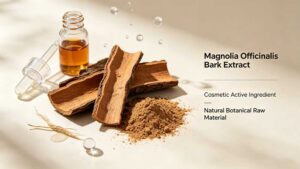
In the competitive landscape of skincare ingredients, few botanical actives offer the multifaceted benefits of phloretin. Derived primarily from the bark and root of apple trees (Malus domestica), this dihydrochalcone polyphenol has gained significant recognition for its potent antioxidant, sebum-regulating, and skin-soothing properties [citation:2][citation:9]. As consumers increasingly seek effective, natural solutions for oily, acne-prone, and sensitive skin, 98% high-purity phloretin has emerged as a versatile and science-backed ingredient. This article provides a detailed examination of phloretin’s mechanisms for sebum control and skin soothing, its proven anti-acne efficacy, practical formulation strategies, and why KangPure’s premium 98% phloretin extract, sourced from the apple-rich regions of Shaanxi, China, stands as the superior choice for discerning formulators.
I. Understanding 98% Phloretin: The Apple-Derived Powerhouse
1. Chemical Profile & Natural Sources
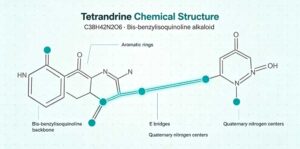
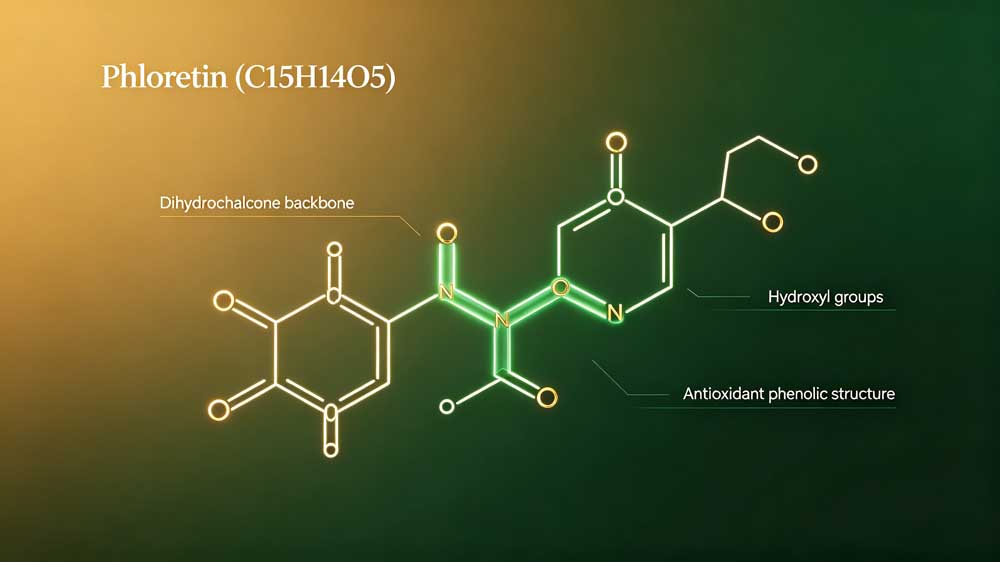
Phloretin (CAS: 60-82-2, Molecular Formula: C15H14O5, Molecular Weight: 274.27 g/mol) is a dihydrochalcone polyphenol predominantly found in the bark, root, and leaves of apple trees and other members of the Rosaceae family [citation:1][citation:9]. It exists in nature primarily as its glucoside, phloridzin (phlorizin), which is converted to the active aglycone phloretin through hydrolysis [citation:9]. The compound is known for its distinctive 2′,4′,6′-trihydroxy-3-(4-hydroxyphenyl)-propiophenone structure, which confers its potent biological activities [citation:9].
Key properties of high-purity phloretin include:
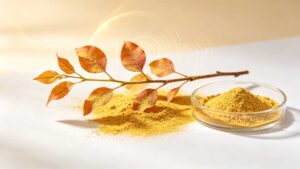
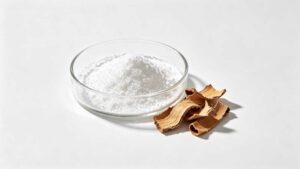
- Appearance: Light yellow to off-white fine powder (purity-dependent)
- Purity: 98% minimum (HPLC)
- Solubility: Poorly water-soluble; soluble in alcohols and glycols
- Melting Point: 260°C [citation:1]
- Particle Size: 80 mesh [citation:1]
Historically, phloridzin was first isolated from apple tree bark in 1835 [citation:9]. Since then, phloretin and its glucoside have been identified in tomatoes and strawberries, though apple remains the most abundant commercial source [citation:9].
II. Sebum Control and Anti-Acne Mechanisms: A Scientific Overview
One of phloretin’s most valuable properties for skincare is its ability to regulate sebum production and combat acne-causing bacteria. These effects have been validated through both in vitro and in vivo research.
1. Inhibition of Sebaceous Gland Activity
Phloretin has been shown to effectively inhibit excessive sebum secretion. Industry literature indicates that phloretin can “block the entry of sugars into epidermal cells and inhibit the excessive secretion of sebaceous glands,” making it a valuable ingredient for treating seborrheic acne [citation:1][citation:4]. By interfering with the cellular energy supply to sebocytes, phloretin helps reduce the overproduction of sebum, a primary contributor to acne formation and oily skin.
2. Antimicrobial Activity Against Acne Pathogens
Recent research published in the Journal of Dermatologic Science and Cosmetic Technology has demonstrated phloretin’s significant antimicrobial activity against both Staphylococcus epidermidis and Cutibacterium acnes (formerly Propionibacterium acnes), the two key bacteria implicated in acne development [citation:3]. In a pivotal study, researchers developed a phloretin-loaded Self-Emulsifying Drug Delivery System (SEDDS) that achieved a droplet size of approximately 68 nm with uniform distribution [citation:3]. This formulation reduced the Minimum Inhibitory Concentration (MIC) values for both bacteria to 31.25 μg/mL, compared to 75 and 37.5 μg/mL for pure phloretin, demonstrating a significant enhancement in antimicrobial potency [citation:3].
3. Anti-Inflammatory Activity
Acne is as much an inflammatory condition as it is a microbial one. Phloretin exhibits notable anti-inflammatory effects mediated through the inhibition of interleukin production and COX-2 expression [citation:3][citation:9]. This dual action—killing bacteria while calming inflammation—makes phloretin a comprehensive solution for both active acne lesions and the post-inflammatory hyperpigmentation they often leave behind.
III. Skin Soothing, Antioxidant, and Skin-Protective Benefits
Beyond its sebum control and anti-acne properties, phloretin offers a broad spectrum of skin-soothing and protective benefits that make it a versatile addition to a wide range of formulations.
1. Potent Antioxidant Activity
Phloretin is a powerful antioxidant that helps neutralize free radicals, mitigating oxidative stress and cellular damage in the skin [citation:2][citation:10]. It has demonstrated activity in scavenging peroxynitrite, hydroxyl, and DPPH radicals, as well as suppressing lipid peroxidation [citation:9]. This antioxidant capacity helps protect the skin from environmental pollutants and UV-induced damage.
2. Skin-Soothing and Barrier-Supporting Properties
L’Oréal’s ingredient library notes that phloretin has been “clinically observed to possess skin-soothing, antioxidative properties” and can be “an effective soothing ingredient for problematic skin” [citation:10]. Additionally, the procyanidins present alongside phloretin in apple bark extract have been shown to possess anti-inflammatory and skin-soothing effects, making it “particularly beneficial for sensitive or irritated skin conditions” [citation:2]. Research also suggests that apple bark extract may help “improve skin barrier function, enhancing moisture retention and overall skin health” [citation:2].
3. Skin Brightening and Pigmentation Control
Phloretin’s skin brightening potential is well-documented. It has been shown to “inhibit the activity of melanocytes and have a lightening effect on various skin spots” [citation:1]. Compared to natural ingredients like arbutin and kojic acid at equivalent concentrations, phloretin exhibits superior tyrosinase inhibition [citation:1][citation:4]. Furthermore, when combined with arbutin and/or kojic acid, phloretin can achieve up to 100% tyrosinase inhibition rate, a remarkable synergistic effect [citation:1][citation:4].
4. Penetration Enhancement
A unique property of phloretin is its ability to enhance the transdermal delivery of other active ingredients [citation:9][citation:10]. Due to the polarity of its chemical structure, phloretin is assumed to provide enhanced transdermal delivery mechanisms, allowing it to effectively penetrate the skin and potentially carry other functional ingredients along with it [citation:10]. This “penetration enhancement” property makes it a valuable addition to formulations that contain other actives like vitamin C, which is already a classic pairing in phloretin-based serums [citation:6][citation:11].
IV. KangPure Phloretin 98%: Quality and Expertise from Shaanxi, China
In the growing market for high-purity phloretin, KangPure distinguishes itself through an unwavering commitment to quality, purity, and supply chain integrity.
1. Premium Sourcing from Shaanxi Province, China
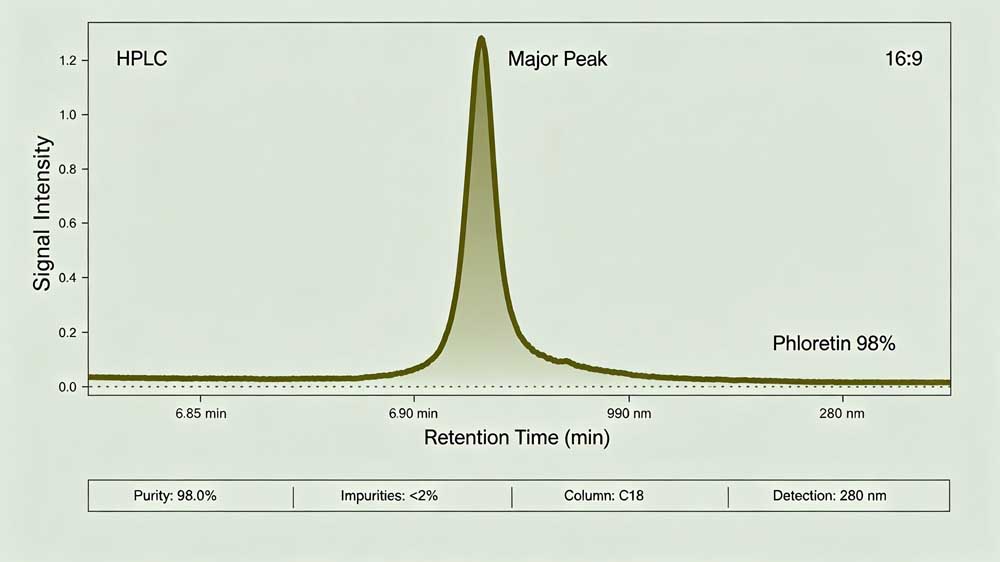
KangPure sources its phloretin raw materials from carefully selected partners in and around Shaanxi Province, China. This region is renowned for its long history of apple cultivation and ideal conditions for producing high-quality botanical extracts. Our manufacturing facility in Xi’an utilizes state-of-the-art technologies to produce phloretin with a guaranteed purity of ≥98% (validated by HPLC), ensuring minimal impurities and consistent batch-to-batch quality [citation:1].
2. Stringent Quality Control and Comprehensive Documentation
We understand that consistent quality is non-negotiable. Every batch of KangPure’s phloretin undergoes comprehensive testing by validated HPLC methods. Each shipment is accompanied by a detailed Certificate of Analysis (COA) verifying:
- Active Content: ≥98% purity, confirmed by HPLC
- Heavy Metals: Within stringent international safety limits
- Microbiological Purity: Assured absence of pathogens
- Residual Solvents: Below permissible levels
Choosing KangPure’s phloretin means partnering with a supplier that prioritizes reliability and your formulation’s success.
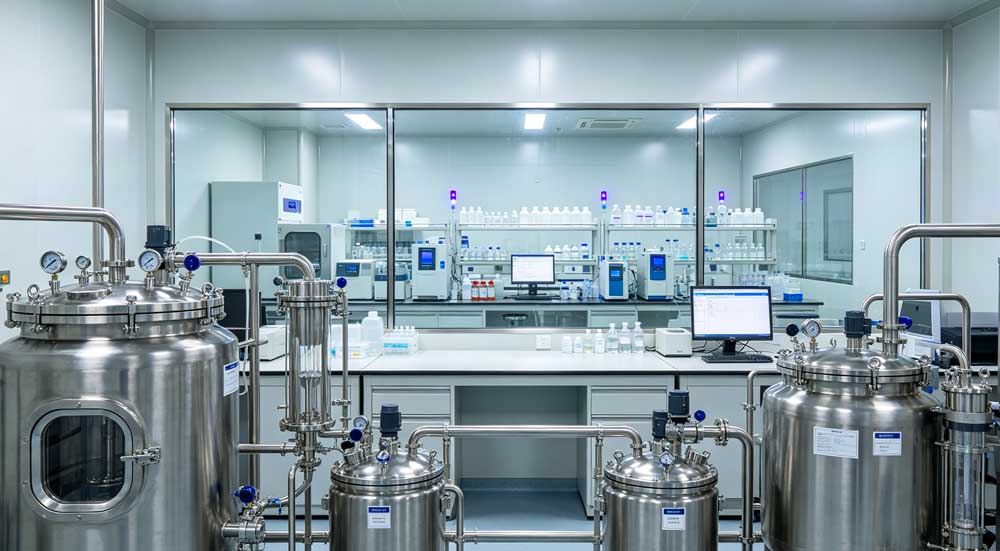
V. Formulation Tips: Maximizing the Potential of 98% Phloretin
For formulators, integrating 98% phloretin into stable and elegant systems is key to unlocking its full potential. The following tips are based on current scientific and industry knowledge.
1. Recommended Usage Levels
Effective usage levels for pure phloretin in skincare products typically range from 0.5% to 2%. Premium formulations, such as SkinCeuticals’ Phloretin CF, famously utilize a 2% concentration in combination with other antioxidants [citation:6][citation:11].
2. Solubilization and Incorporation
Due to its poor water solubility, phloretin requires pre-dissolution in glycols (such as propylene glycol or butylene glycol) or ethanol before being added to the aqueous phase of a formulation [citation:3][citation:5]. It can also be incorporated into the oil phase of emulsions. The use of advanced delivery systems, such as SEDDS, can significantly enhance its solubility, physicochemical stability, and skin retention [citation:3].
3. Synergistic Combinations and Stabilization
- Phloretin + Vitamin C + Ferulic Acid: This is the classic, clinically proven “gold standard” combination for enhanced environmental protection, skin brightening, and anti-aging benefits [citation:6][citation:11].
- Phloretin + Arbutin + Kojic Acid: As noted in industry literature, this combination can result in synergistic and near-complete tyrosinase inhibition, making it a powerful blend for hyperpigmentation and uneven skin tone [citation:1][citation:4].
- Protection from Oxidation: While phloretin is itself an antioxidant, protecting it from degradation is key. Formulations should be protected from excessive heat, light, and oxygen.
VI. Applications and Market Trends
Phloretin’s exceptional safety and multifunctional efficacy profile has led to its widespread adoption in the cosmetic industry. Its primary applications include:
- Acne and Sebum-Control Products: Serums, cleansers, and toners targeting oily skin and acne-prone complexions [citation:1][citation:3].
- Skin-Brightening and Anti-Pigmentation Formulations: For reducing dark spots, melasma, and post-inflammatory hyperpigmentation [citation:1][citation:4].
- Anti-Aging and Photoprotective Skincare: Its potent antioxidant and anti-inflammatory actions help combat free radical damage [citation:2][citation:9].
- Soothing and Barrier-Repair Products: For sensitive or irritated skin, leveraging its anti-inflammatory and barrier-supporting properties [citation:2][citation:10].
VII. Conclusion
Phloretin, particularly at a high purity of 98%, represents a remarkably versatile and scientifically validated active ingredient for advanced skincare formulations. Its proven ability to control sebum, combat acne-causing bacteria, soothe inflammation, and provide potent antioxidant protection makes it an ideal choice for a wide range of products targeting oily, acne-prone, sensitive, and aging skin. KangPure is proud to offer premium 98% phloretin sourced and manufactured with uncompromising quality, integrity, and traceability. By choosing KangPure, you are selecting a partner dedicated to your success in the competitive cosmetics market.
VIII. Contact Us
Ready to elevate your skincare formulations with KangPure’s premium 98% Phloretin? Our expert team is ready to provide you with technical data sheets, COAs, samples, and formulation support. Contact us today to explore the possibilities and let us be your trusted partner in creating exceptional, science-backed products.
Email: info@kangpure.com
Website: www.kangpure.com
References
- ChemicalBook. (2016). Phloretin Product Information. ChemicalBook. [citation:1]
- Mosaique. (n.d.). Pyrus Malus Bark Extract. Mosaique Skin. [citation:2]
- Rodríguez Martínez, I. A., et al. (2025). Development and characterization of a phloretin-loaded self-emulsifying drug delivery system for topical acne treatment. Journal of Dermatologic Science and Cosmetic Technology. [citation:3]
- Shaanxi Yi An Biological Technology Co., Ltd. (2016). Phloretin Product Information. Company Product Data. [citation:4]
- SkinCeuticals. (2025). Phloretin CF Serum Product Information. SkinCeuticals UK. [citation:6][citation:11]
- AccessDermatologyDxRx. (n.d.). Phloretin. In Baumann’s Cosmetic Dermatology. [citation:9]
- L’Oréal Paris. (n.d.). Phloretin Ingredient Library. L’Oréal Paris USA. [citation:10]